
Reflections from Aspen Challenge Detroit
Two Bezos Scholars alums reflect on their Aspen Challenge Detroit Experience.
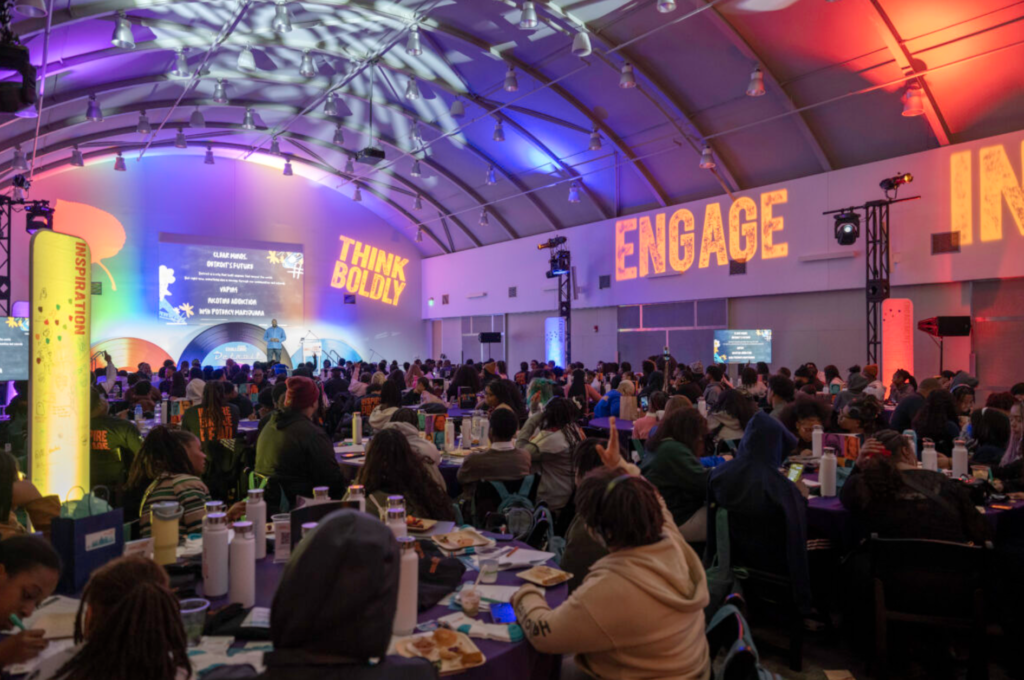
Before students step on the Aspen Challenge stage to share their ideas, there is a space that is quieter and unseen to the audience but just as important: the green room. The Green Room is filled with anticipation, nerves, and possibility, where confidence is still taking shape and support matters the most.
At this year’s Aspen Challenge Detroit, two BSP alums, Makayla Dawkins (2018) and Ahmed Kabuya (2023), found themselves in that space, creating an environment where young people could practice courage, share moments of vulnerability, and build connection before stepping onto the stage.
In their reflections below, Makayla and Ahmed offer insight into the behind-the-scenes moments and the leadership that begins long before the spotlight.
From Scholar to Champion
Makayla Dawkins, 2018 Scholar
Coming back to the Aspen Challenge felt like a full-circle moment. Walking into the venue, I thought back to 2018 when I became a Bezos Scholar. Returning as an alum, I felt a deep sense of gratitude for the community that continues to foster such radical innovation and leadership.
While I loved helping set up the event and connecting with a new generation of bright, motivated young people, there was one specific experience I’ll hold close to my heart: the Green Room.
There is a unique magic that happens behind the scenes before the lights go up. In the Green Room I was able to be a champion for students in their most vulnerable moments. Before they stepped onto the stage to change the world, I was able to help calm nerves, offer a final word of encouragement, and witness their transition from nervous presenters to confident leaders.
Projects That Inspire
The scope of the projects this year was staggering. The teams didn’t shy away from the big issues, and their solutions were comprehensive, thoughtful, and urgently needed. I saw everything from anti-violence initiatives designed to foster peace and safety, to mental health advocacy aimed at breaking stigmas and increasing access, to creative problem-solving that tackled systemic issues with fresh eyes.
A Focus on Healthy Communities
These projects reminded me of the core of my own Community Change Project. My project focused on creating healthy communities by addressing mental health through diverse, holistic approaches that go beyond traditional talk therapy. It was a reminder that wellness isn’t one-size-fits-all; it requires a tapestry of different methods to truly support a community’s heart and mind.
The Evolution of Creativity
What struck me most was how much creativity has evolved. These young leaders are building viable, scalable solutions in incredibly short timeframes. They aren’t just dreaming about the future; they are designing it in real-time.
Being back at the Aspen Challenge wasn’t just a trip down memory lane; it was a powerful reminder that when we invest in young people and give them the space to lead, the solutions they create are nothing short of transformative. I am so proud to be a part of this lineage and even prouder of the students who took the stage this year.
More Than a Routine
Ahmed Kabuya, 2023 Scholar
One of the most meaningful experiences I had this spring was working with Aspen Challenge Detroit. It was a refreshing and transformative experience for me, both personally and as a leader.
As a STEM major, most of my life usually follows a very repetitive cycle. My days are spent between my room, lecture halls, the library, study jams, quantum mechanics problem sets, the gym at noon, or soccer on weekends. I rarely have opportunities to step outside that environment and engage deeply with people in different ways. Because of that, my experiences can feel structured and isolated around academics.
The Aspen Challenge gave me something completely new. It pushed me outside my normal routine and allowed me to reconnect with a side of myself that I had not exercised in a long time. For the first time in a while, I found myself surrounded by passionate young people committed to improving their communities and tackling issues like gun violence, drug abuse, and food insecurity. Watching students come together with so much creativity and determination was surreal.
The experience reminded me of my time as a BSP Scholar working on the South African Ideas Festival. I vividly remembered the challenges that came with teamwork: managing responsibilities, handling disagreements, distributing resources, and still finding moments to laugh together through stress. During Aspen Challenge Detroit, I felt those same emotions again. It reminded me that leadership is not just about organizing people or completing tasks. It is about building trust, supporting others, and creating spaces where people feel seen and valued.
One moment that stayed with me happened during the Solutions Showcase. Before students went on stage, we were all gathered in the green room, a space that showed their truest selves. Some were excited; others were nervous, anxious, or panicking about speaking in front of a large audience. Despite the confidence they showed publicly, many were still battling fear internally.
One student approached me and asked, “What advice would you have for someone like me who experiences stage fright?” That moment stayed with me because it forced me to reflect on my own growth. Public speaking never came naturally to me. I remembered my own struggles with fear and self-doubt, and how critical creating systems that built my confidence was. Confidence often begins when someone else believes in you first.
In that moment, I realized leadership is not always about having the perfect answer. Sometimes it’s about being compassionate enough for someone to feel safe being vulnerable around you. The fact that this student trusted me enough to ask meant more to me than I expected, and it showed me the importance of presence, empathy, and encouragement.
Instead of giving a perfect motivational speech, I focused on creating a space where she felt supported. I reminded her that everyone in that room was nervous, too, even if they did not show it. I told her it was okay to make mistakes and that the people wanted to see her succeed. I wanted her to understand that confidence is not the absence of fear, but the willingness to move forward despite it. That interaction changed the way I think about leadership. Before this experience, I often viewed leadership as being the most prepared person in the room or the person with the strongest ideas. But Aspen Challenge Detroit taught me that leadership can also look like listening, reassuring others, and helping people believe in themselves during difficult moments.
Aspen Challenge reminded me why programs like the Bezos Scholars Program and leadership development programs for young people matter so much. They create environments where young people are empowered to lead with compassion, creativity, and courage. More importantly, they bring together people from different backgrounds and experiences and show them that meaningful change starts with community.
For me, this experience was not just about mentoring students. It was also about rediscovering parts of myself that had been buried under routines, academics, and structure. It reminded me that growth often happens when we step outside the spaces we are comfortable in and allow ourselves to connect with others more deeply.